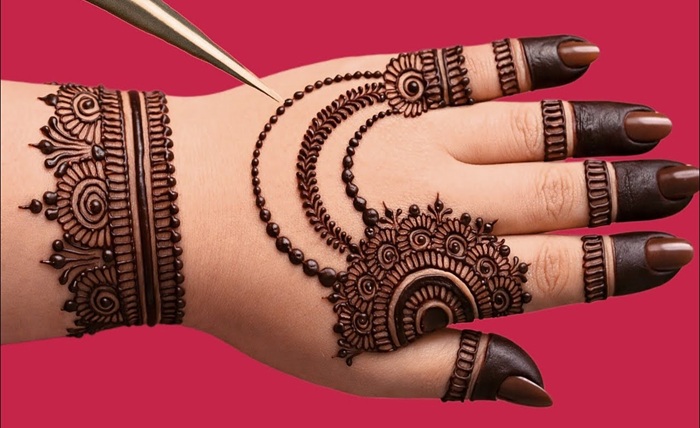
Mehndi has always carried meaning. It marks celebration, beauty, ritual, and memory. But the way people choose mehndi today says something more. It shows how personal expression has changed.
Traditional mehndi followed familiar structures. Dense florals. balanced symmetry. full coverage. The design signaled belonging. It connected the wearer to a larger cultural form. The pattern mattered because it stayed within an accepted language.
Modern mehndi often works differently.
People still value tradition, but many no longer want to repeat it without change. They want lighter layouts, sharper contrasts, unusual spacing, and more visible skin. They want the design to feel personal, not only ceremonial.
This shift is not only aesthetic. It reflects a new attitude toward risk and expression.
A traditional design feels safe because it is known. A modern design often involves choice without full certainty. Will the empty space look elegant or incomplete? Will a bold motif feel striking or too harsh? Will a minimalist pattern still carry enough presence? These questions turn design into a small creative gamble.
That gamble is part of the appeal.
Modern mehndi is not trying to reject tradition. It is trying to negotiate with it. It keeps some older forms, then bends them. It respects the structure, but allows the wearer to place their own taste inside it.
This is why contemporary mehndi feels so revealing. It shows what happens when inherited beauty practices meet a stronger desire for individual identity.
The change can be seen in several ways:
- Less density and more negative space
- More experimental placement and framing
- Greater value placed on uniqueness over convention
These are visual choices, but they also reflect cultural confidence. The wearer is no longer asking only, “What is expected?” They are also asking, “What feels like me?”
This article begins with the first side of that shift: why traditional mehndi patterns felt stable for so long, and why that stability still matters even as new styles emerge.
Why Traditional Mehndi Patterns Felt Stable And Trusted
Traditional mehndi worked like a shared language.
Each pattern followed known rules. Dense florals filled the hand. Lines stayed balanced. Shapes mirrored each other. The result felt complete and predictable.
That predictability created trust.
When a bride chose a classic design, she knew how it would look. The outcome matched expectation. There was little risk of imbalance or visual confusion. The design had already been tested across generations.
This stability served a purpose.
Mehndi was not only decoration. It marked important moments. Weddings. festivals. rituals. In these settings, people prefer reliability. They do not want surprise. They want the design to feel correct.
The structure helped artists as well.
Clear patterns reduced uncertainty. The artist could execute with confidence. The wearer could commit without doubt. The process stayed smooth from start to finish.
This is similar to environments where outcomes are familiar and repeated.
In fast-changing systems, like cricket betting live, decisions rely on shifting signals and changing odds. Traditional mehndi sits at the opposite end. It reduces variation. It favors consistency over experimentation.
That contrast explains why traditional styles remained dominant for so long.
They offered:
- Visual balance that rarely failed
- Cultural acceptance without question
- Low risk in both execution and result
These qualities made traditional mehndi the default choice.
But as personal expression became more important, this stability began to feel limiting.
Why Modern Wearers Shift Toward Experimentation And Personal Style
The shift begins with control.
Modern wearers want to choose how they look, not only follow what is expected. Mehndi becomes a personal statement, not just a cultural marker.
This changes how designs are selected.
Instead of asking, “What is correct?” people ask, “What fits me?” That question opens space for variation. It allows new shapes, new spacing, and new placement.
Minimal designs are one clear result.
They leave parts of the skin visible. This breaks the old rule of full coverage. It creates contrast. The design feels lighter and more deliberate.
Placement also changes.
Designs move off the center. They stretch along fingers. They wrap like bands or sit asymmetrically. These choices introduce tension. The eye follows the pattern in a less predictable way.
This is where risk enters.
A dense traditional design hides small mistakes. A minimal design exposes them. Every line matters more. Every gap becomes visible. The margin for error shrinks.
But that risk creates impact.
A bold, clean design stands out more than a safe, familiar one. It signals intention. It shows that the wearer made a choice, not just followed a template.
Social context reinforces this shift.
People share images. They compare styles. Unique designs gain attention faster than repeated ones. This rewards experimentation. It pushes styles further away from strict tradition.
The change is not random.
It follows a clear pattern:
- Desire for individuality increases
- Tolerance for visual risk grows
- Value shifts from tradition to expression
This does not erase tradition.
It reshapes it.
Traditional elements still appear, but they are rearranged. They become tools, not rules.
How Risk In Design Creates Stronger Visual Impact
Risk in mehndi is visible.
It shows in spacing, contrast, and placement. A safe design fills space evenly. A risky design leaves gaps, shifts balance, and draws attention to fewer elements.
Negative Space As A Risk Tool
Empty space changes everything.
In traditional patterns, the hand looks full. In modern designs, parts of the skin remain bare. This creates contrast. The eye moves faster. Each line carries more weight.
If done well, the result feels sharp.
If done poorly, it feels unfinished.
That is the risk.
Asymmetry And Tension
Symmetry feels calm.
Asymmetry creates tension. One side carries more detail. The other stays light. This imbalance pulls the eye across the hand.
It feels dynamic.
But it also reduces safety. There is no mirror to correct mistakes.
Fewer Elements, Higher Precision
Modern designs often use fewer shapes.
This increases pressure on execution. Each curve must be clean. Each line must hold its form. There is no density to hide errors.
The design becomes precision-driven.
Contrast Over Complexity
Traditional mehndi builds impact through detail.
Modern mehndi builds impact through contrast. Thick lines next to thin ones. Dense sections next to open space. Dark shapes against bare skin.
This approach is simpler but more exposed.
Why This Works
Risk creates attention.
When a design breaks expectation, the eye pauses. It tries to understand the pattern. This pause creates engagement.
Safe designs blend in.
Risky designs stand out.
The key is control.
Risk without structure looks careless. Risk with control looks intentional. That difference defines strong modern mehndi.
Balancing Tradition And Expression In Modern Mehndi
The strongest designs do not reject tradition.
They use it as a base, then adjust it with intent.
A fully traditional pattern offers safety. A fully experimental design offers impact. The best results sit between these extremes. They combine structure with selective risk.
Start with a stable core.
Use familiar motifs. Keep proportions balanced. This anchors the design. It ensures the result still feels complete and culturally grounded.
Then introduce controlled variation.
Reduce density in one area. Shift placement slightly. Add contrast with spacing. These changes create distinction without breaking coherence.
Think in layers:
- Base layer — traditional structure
- Adjustment layer — modern spacing and flow
- Highlight layer — bold elements that draw attention
Each layer adds meaning.
This approach removes guesswork.
Instead of choosing between safe and bold, the design becomes measured and intentional. It carries both reliability and individuality.
The final result does more than decorate.
It communicates.
It shows respect for tradition while allowing personal identity to appear clearly. It reflects a broader shift in how people make choices today: not by following rules alone, but by shaping them to fit who they are.
That is why modern mehndi feels different.
It is not only about patterns on skin.
It is about how people manage risk, express taste, and define themselves within a tradition that continues to evolve