Introduction
Conversation hearts have become one of the most recognizable symbols of Valentine’s Day, representing love, friendship, and playful communication through candy. These small, colorful heart-shaped sweets carry short printed messages like “Be Mine” and “Love You,” making conversation hearts more than just candy—they are tiny edible expressions of emotion. Over time, conversation hearts have evolved from simple sugary treats into cultural icons that appear in traditions, memes, crafts, and seasonal marketing campaigns.
The popularity of conversation hearts lies in their simplicity and emotional appeal. People of all ages associate conversation hearts with affection and nostalgia, especially during February when they dominate store shelves. Their pastel colors and charming phrases evoke a sense of childhood innocence while still being used by adults to express romantic or friendly feelings. This dual appeal keeps conversation hearts relevant across generations.
In modern times, conversation hearts have expanded beyond candy bowls into digital culture and themed merchandise. From social media jokes to decorative home items, conversation hearts continue to influence how people celebrate Valentine’s Day. Their enduring presence proves that even a small piece of candy can carry significant emotional and cultural meaning.
Conversation Hearts: The Fascinating History Behind the Candy Tradition
The history of conversation hearts dates back to the mid-19th century when candy makers began experimenting with printed sugar confections. Early versions of conversation hearts were inspired by medical lozenges and Victorian-era “candy messages,” which were often handwritten or stamped onto sweets. These early conversation hearts were larger, less colorful, and featured longer phrases than today’s versions.
As manufacturing techniques improved, conversation hearts became smaller, more uniform, and more widely available. By the early 20th century, they had become a staple of Valentine’s Day celebrations in the United States. The simplicity of conversation hearts allowed them to be mass-produced, making them affordable gifts for children and adults alike.
Today, conversation hearts are produced on a massive scale and distributed globally during the Valentine’s season. Despite changes in technology and consumer preferences, the core concept remains the same: sharing feelings through edible messages. The long history of conversation hearts reflects how food traditions can evolve while still preserving their emotional roots.
Conversation Hearts: Evolution of Design, Colors, and Messages
Over the decades, conversation hearts have undergone significant design changes to stay relevant to modern consumers. Originally, conversation hearts were white and printed with simple sayings, but today they come in pastel pink, purple, yellow, green, and blue. These soft colors have become synonymous with Valentine’s Day aesthetics and are instantly associated with conversation hearts.
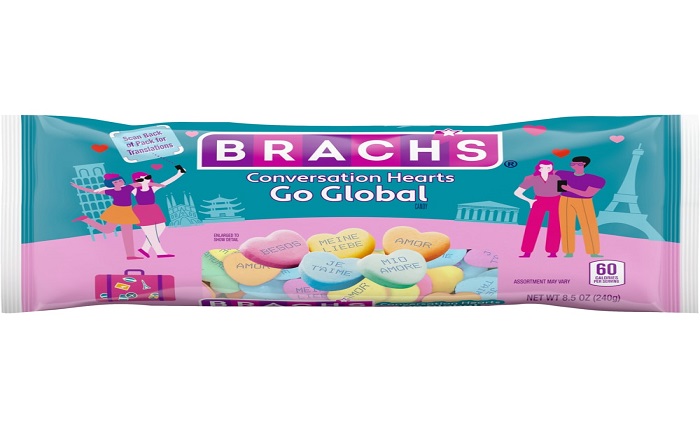
The messages printed on conversation hearts have also evolved. While early phrases included formal expressions like “Be True” or “Married in White,” modern conversation hearts feature more casual and playful sayings such as “Text Me,” “LOL,” or “You Rock.” This shift reflects changing communication styles in the digital age, where short and expressive phrases dominate.
Packaging and branding of conversation hearts have also become more creative. Limited-edition boxes, themed collections, and custom messages are now common in the market. These innovations keep conversation hearts fresh and appealing to younger audiences while maintaining their nostalgic charm for older generations.
Conversation Hearts: Cultural Meaning and Emotional Symbolism
Conversation hearts carry deep cultural significance beyond their sugary taste. They symbolize affection, connection, and the tradition of expressing emotions in a simple, tangible way. For many people, conversation hearts are associated with childhood classroom exchanges, Valentine’s parties, and handwritten notes paired with candy gifts.
In romantic contexts, conversation hearts serve as lighthearted tokens of love. Couples often use them as playful gestures rather than serious declarations, which makes conversation hearts unique among Valentine’s gifts. Their informal nature allows people to express feelings without pressure, making emotional communication more approachable.
Conversation hearts also play a role in social bonding. Friends exchange them as symbols of appreciation, and families use them in seasonal decorations or shared treats. This versatility reinforces the idea that conversation hearts are not limited to romance but are instead universal symbols of kindness and connection.
Conversation Hearts: The Manufacturing Process Behind the Candy
The production of conversation hearts involves a carefully controlled candy-making process that ensures consistency in shape, texture, and messaging. The base ingredients for conversation hearts typically include sugar, corn syrup, gelatin, and flavoring agents. These ingredients are mixed, heated, and formed into a dough-like consistency.
Once prepared, the dough is rolled, shaped into hearts, and dried to achieve the signature chalky texture. The printing process for conversation hearts involves food-safe ink stamping, where messages are pressed onto the surface before the candies fully harden. This step requires precision to ensure that each message is legible and properly centered.
Quality control is essential in the production of conversation hearts, as uniformity is key to their appeal. After production, the candies are sorted, packaged, and shipped to retailers ahead of Valentine’s season. This large-scale manufacturing process allows conversation hearts to reach millions of consumers each year while maintaining their iconic appearance.
Conversation Hearts: Marketing, Seasonal Demand, and Commercial Success
The marketing of conversation hearts plays a major role in their annual popularity spike. Candy companies rely heavily on Valentine’s Day advertising campaigns to promote conversation hearts, often highlighting nostalgia, romance, and seasonal joy. These marketing strategies help maintain strong consumer interest year after year.
Seasonal demand for conversation hearts is highly concentrated, with most sales occurring in the weeks leading up to Valentine’s Day. Retailers stock large quantities of conversation hearts, often placing them near checkout counters to encourage impulse purchases. This strategic placement contributes significantly to their commercial success.
In recent years, conversation hearts have also been marketed through limited-edition flavors, collaborations, and social media campaigns. These efforts help attract younger audiences while keeping long-time fans engaged. Despite competition from other Valentine’s treats, conversation hearts remain one of the most profitable seasonal candies in the industry.
Conversation Hearts: Digital Culture, Memes, and Modern Trends
In the digital era, conversation hearts have taken on new life as internet memes and social media content. Their short phrases and nostalgic design make conversation hearts perfect for humorous reinterpretation online. People often create parody versions of conversation hearts featuring modern slang, tech references, or sarcastic messages.
Brands and influencers also use conversation hearts in digital marketing campaigns to connect with audiences during Valentine’s season. These campaigns often blend traditional imagery with modern humor, making conversation hearts relevant in both physical and digital spaces.
Beyond memes, conversation hearts have inspired emojis, graphic designs, and themed filters on social platforms. This digital transformation shows how conversation hearts have adapted to new forms of communication while retaining their original charm as expressive candy.
Conversation Hearts: DIY Crafts, Decorations, and Creative Uses
Conversation hearts are widely used in DIY crafts and creative projects, especially during Valentine’s Day. People incorporate conversation hearts into wreaths, centerpieces, greeting cards, and classroom decorations. Their colorful appearance makes them ideal for festive designs and seasonal art projects.
In baking, conversation hearts are often used as cake toppers, cupcake decorations, and cookie embellishments. While they are edible, many people use them primarily for decorative purposes due to their hard texture. This versatility makes conversation hearts a favorite among crafters and bakers alike.
Educational settings also use conversation hearts for counting, spelling activities, and classroom games. Teachers incorporate them into lessons to make learning more engaging during the Valentine’s season. These creative uses highlight how conversation hearts extend beyond candy into tools for imagination and expression.
Conversation
Conversation hearts continue to hold a special place in cultural traditions, blending nostalgia, creativity, and emotional expression. Their simplicity is what makes conversation hearts so powerful, allowing people to communicate feelings in a fun and accessible way. From their historical roots to their modern digital presence, conversation hearts have evolved while maintaining their core identity.
As trends change and new forms of communication emerge, conversation hearts remain a beloved symbol of Valentine’s Day. Their ability to adapt to cultural shifts while preserving tradition ensures they will continue to be enjoyed for generations to come.
FAQs
1. What are conversation hearts made of?
Conversation hearts are made primarily of sugar, corn syrup, gelatin, and flavoring, forming a chalky, sweet candy.
2. Why are conversation hearts popular during Valentine’s Day?
Conversation hearts are popular because they symbolize love and affection through simple, playful messages.
3. Can conversation hearts be customized?
Yes, some modern versions of conversation hearts offer customizable messages for special occasions.
4. Are conversation hearts still made the same way as before?
While the core process is similar, modern manufacturing of conversation hearts uses advanced printing and mass-production techniques.
5. Do conversation hearts expire or go bad?
Conversation hearts have a long shelf life but may become harder or lose flavor over time if not stored properly.